

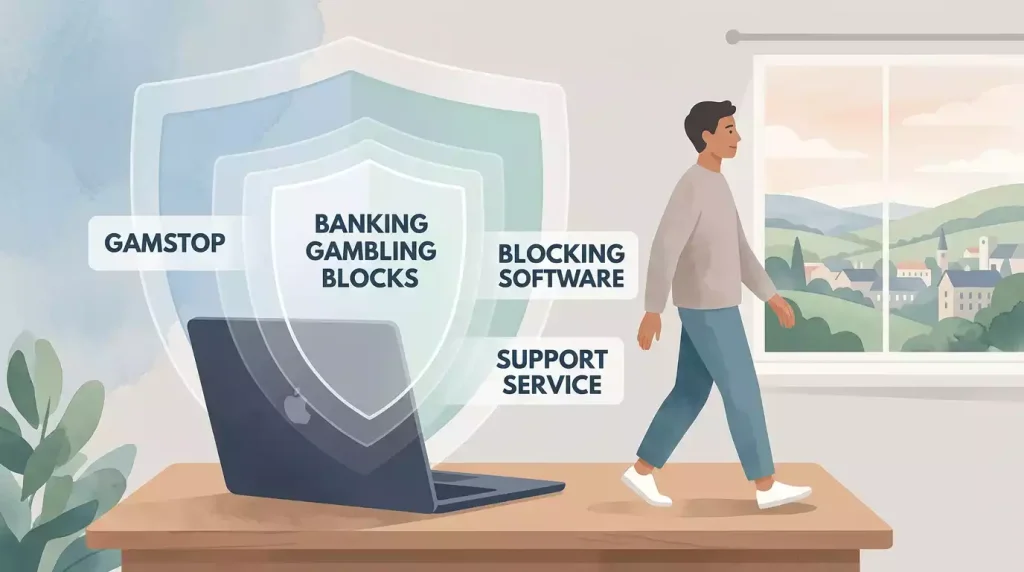
When someone searches for gambling sites outside a protection system, the search can come from very different situations. Some people are simply trying to understand the UK rules. Others are facing an active block, a self-exclusion, a bank restriction, debt pressure or a strong urge to chase losses. This page is for the second situation. If a protective tool is stopping you, the safest response is not to work around it. It is to pause, strengthen the protection and look for support that matches the problem.
Self-exclusion and blocking tools are not punishments. They are layers of friction designed to create space between an urge and an action. That space can matter when money, stress, secrecy or debt are involved. This guide explains the main protective layers in plain language and gives a decision path for what to do when continuing would make the situation riskier.
The wider picture is in our guide to checks, risks and support.
What self-exclusion is meant to do
Self-exclusion is a decision to block yourself from gambling access for a set period through a formal route. In the UK context, GAMSTOP is a central part of online self-exclusion for participating gambling businesses, and official guidance warns against trying to work around self-exclusion. That warning should be taken seriously. If you have chosen self-exclusion, the original reason for that choice still matters even if the urge to gamble returns later.
A self-exclusion does not solve every financial or emotional issue by itself. It creates a barrier. The barrier is more useful when it is supported by other barriers: bank gambling blocks, blocking software, safer device habits, trusted conversations and support services. The aim is not to make gambling harder for a day; it is to reduce the chance of a high-risk moment turning into further harm.
Blocking tools are protective layers
GambleAware describes several protective steps, including GAMSTOP, blocking software, bank gambling payment blocks and venue self-exclusion. These tools do different jobs. A self-exclusion can stop access through participating gambling businesses. Blocking software can add friction on devices. Bank gambling blocks can stop or slow gambling transactions where the bank offers them. Venue self-exclusion can help with in-person gambling settings. None of these layers is perfect on its own, but together they can make a relapse harder and a pause easier.
Bank gambling blocks vary by bank. Some may include cooling-off periods or different controls, so it is important to check the current information from your own bank rather than relying on a general description. If a block is active, treat it as a signal. The safer question is not “how do I get around this?” but “what was this block protecting me from, and what should I do before changing it?”
Pause-and-protect decision path
| If this is happening | What it may mean | Safer next step |
|---|---|---|
| You are self-excluded and looking for another site | The protection is being tested at the exact moment it is needed. | Do not look for a workaround. Keep the exclusion in place and add another layer such as a bank block or blocking software. |
| A bank gambling block is stopping a deposit | Your own earlier decision or bank control is creating friction before money leaves the account. | Leave the block active and use the pause to review finances, debts and recent losses. |
| You are trying to win back money already lost | Loss-chasing can make decisions faster, riskier and more emotional. | Stop depositing, step away from the account and speak to a trusted person or support service. |
| Gambling is affecting bills, borrowing or relationships | The problem is no longer just entertainment or a single account issue. | Look for gambling support and financial guidance together; one without the other may leave the pressure in place. |
When the safer answer is not to continue
It can be difficult to recognise the point where a gambling decision stops being a normal choice and becomes a harm signal. Warning signs include gambling to recover losses, hiding activity, borrowing to deposit, feeling unable to stop after a win or a loss, gambling when angry or distressed, or planning to change payment methods because one route is blocked. These signs do not require a diagnosis before they deserve attention. They are practical reasons to pause.
If you are angry because an account is blocked or a withdrawal is delayed, separate the account issue from the gambling urge. A complaint can be handled with evidence and a clear timeline. An urge to keep gambling needs a different response: distance, support and barriers. Mixing the two can lead to more deposits while the original problem remains unresolved.
Support routes to consider
Recognised support resources can help with different parts of the problem. GambleAware provides information on blocking and self-exclusion tools. The NHS provides information about gambling harms and help options. GamCare and the National Gambling Helpline are widely used support routes, but current contact details should always be checked on the live service page rather than copied from memory. MoneyHelper explains that gambling can affect finances, relationships and other areas of life, and that financial help may be needed alongside help with gambling itself.
Do not wait until the situation feels extreme before using support. If gambling is affecting rent, bills, debt repayments, work, sleep or relationships, it is already worth speaking to someone. If you are not ready for a phone conversation, start by reading the current official or recognised support pages and choosing one practical barrier to add today. That might be a bank gambling block, blocking software, a conversation with someone you trust, or a plan to stop using a device when urges are strongest.
How to make protection stronger today
- Keep existing self-exclusion active: do not try to bypass it during an urge or after a loss.
- Use bank controls where available: check your own bank’s current gambling block options and any cooling-off period before making changes.
- Add device-level friction: blocking software can reduce impulsive access from phones, tablets and computers.
- Reduce private triggers: remove saved payment details, unsubscribe from promotional messages where possible, and avoid browsing gambling content when stressed.
- Bring in support: tell one trusted person what protection is in place and what you do not want to undo.
These steps are not about willpower alone. They are about making the safer decision easier at the moment when willpower is under pressure. A person who is calm in the morning may make a different choice late at night after a loss. Protection should be designed for the difficult moment, not the easy one.
What this page will not help you do
This page will not explain how to get around GAMSTOP, bank blocks, geoblocks, identity checks or account restrictions. It will not list gambling sites, recommend payment routes or describe ways to continue after a protective barrier appears. That is deliberate. If a protection is active, the most useful guidance is about staying protected and getting help, not finding another route to the same risk.
If your question is simply whether a site is licensed or how UK identity checks work, read the separate guidance on official register checks and payments. If your question is “how do I keep gambling despite a block?”, treat that as a warning sign in itself. The block is doing its job by creating a pause. Use that pause.
Understanding the boundary helps: what UK readers should check first.
If there is also a complaint or money issue
A dispute with a gambling business can still be real even when gambling harm is also present. You can document a complaint, save evidence and follow the business complaint process without continuing to gamble. If the issue involves debt, missed bills or pressure to recover losses, add financial help to the plan. Gambling support and money guidance work best when they are not treated as separate worlds. The practical question is: what helps you avoid more harm while the complaint or financial issue is being handled?