

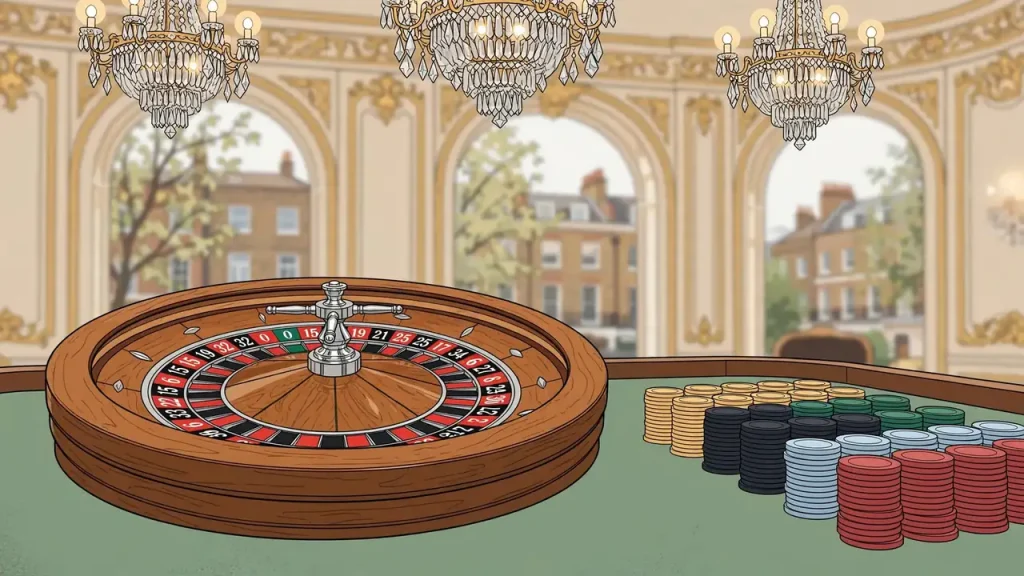
“Not on GamStop” describes participation in a UK self-exclusion scheme, not a casino’s location, regulator or UK authorisation.
What “Not on GamStop” Means for a European Casino
“Not on GamStop” describes a casino that does not participate in GAMSTOP, the national online self-exclusion scheme for Great Britain. The phrase says something about the reach of that scheme; it does not, by itself, establish where a casino is based, which regulator oversees it, or whether it is authorised to offer gambling to people in the UK. “European casino” is also a geographical description, not a regulatory status. A business may present itself as European while operating under a system that is separate from the UK’s.
GAMSTOP is designed to apply a player’s self-exclusion across multiple online gambling businesses, rather than only at the site where the player first registered. Once registered, the player is blocked from accessing existing gambling accounts or creating new ones with online operators covered by the scheme across the UK. The block is provided free of charge. It operates across participating licensed gambling websites and apps, so a player does not have to arrange a separate exclusion with each participating operator.
That shared coverage is what makes GAMSTOP different from a setting within one casino account. An individual operator’s self-exclusion applies to that business; GAMSTOP connects the exclusion across the licensed online operators required to participate. The scheme is not a general internet filter and does not itself regulate casinos. Its function is to communicate and apply self-exclusion within the operator network covered by the scheme.
How GAMSTOP fits into UK regulation
For online gambling serving Great Britain, participation in GAMSTOP is part of the UK regulatory framework. The Gambling Commission made it compulsory for online operators from 31 March 2020. As a result, UK-licensed online casinos must block customers who are registered with the scheme. “Not on GamStop” therefore does not mean that a UK-licensed casino has an optional policy of ignoring an active GAMSTOP exclusion. A casino outside the scheme is outside this particular network of participating operators.
Choosing a Casino: UK Options and Key Considerations
This distinction matters because self-exclusion coverage and gambling licensing answer different questions. GAMSTOP concerns whether participating online gambling businesses block access for someone who has excluded themselves. A licence concerns whether an operator is authorised under the applicable gambling rules to serve customers in a market. A site’s absence from GAMSTOP does not show that it has a UK licence, and a European location does not substitute for one.
Remote gambling operators offering services to customers in Great Britain must hold the relevant Gambling Commission licence, regardless of where the operator is physically located. Online gambling in the UK is legal only through licensed and regulated sites. An overseas casino that does not hold a UK Gambling Commission licence is outside the UKGC regulatory system; it is not equivalent to a UK-licensed casino simply because it accepts UK customers or describes itself as European.
The practical distinction is thus not “British casino versus European casino”. It is whether the operator is licensed to serve the British market and subject to the associated requirements, including participation in GAMSTOP. A casino can be based elsewhere in Europe and still need a UK licence if it sells remote gambling to customers in Great Britain. Conversely, a casino’s claim that it is European tells you nothing on its own about UK authorisation or whether it is covered by GAMSTOP.
What the label does—and does not—tell you
When a site is described as a non-GamStop European casino, the label indicates that it is not part of the scheme’s UK-wide operator coverage. It does not confirm that the site is safe, reliable, regulated in the UK, or suitable for a particular player. Nor does it explain what protections or complaint routes apply. Those questions depend on the operator’s actual legal status and the rules that govern it, not on a broad regional label.
The wording can also obscure an important difference between a casino’s location and its market. An operator may be based outside the UK while offering gambling to people in Great Britain. If it does so, its location does not remove the requirement to hold a UK Gambling Commission licence. A foreign licence, where one is claimed, is not the same as a UK licence and does not make the operator part of GAMSTOP.
Market United Kingdom
Language English
Casino Type Non-GamStop European
This guide uses “European casino” as a broad description, not as proof of a common licensing system or shared consumer safeguards. It does not treat casinos outside GAMSTOP as a single regulated category. The useful starting point is to separate three things: where a business is based, whether it holds the licence required to serve Great Britain, and whether it participates in the self-exclusion scheme. Only the last of these is directly conveyed by the phrase “not on GamStop”; the other two require separate assessment.
Our top casino picks for the UK
- Revery PlayBonus: 100% up to€1,000+ 100 FS · Payout speed: 1-3 business days
- SpinFormulaBonus: 550% Up To £15,000 + 550 FS · Payout speed: 1-3 business days
- BritsinoBonus: Welcome Package – Get your £2,200 + 2,000 FS · Payout speed: 1-3 business days
- ZombillionBonus: Welcome Pack 250% up to £4000 + 200 FS · Payout speed: 1-3 business days
- NightLuckBonus: Welcome Pack + 805% Up To 6400€ + 280 FS · Payout speed: 1-3 business days
- BeOnBetBonus: 100% up to €500 + 100 FS · Payout speed: 1-3 business days
- WinBeastBonus: €5000 + 500 FS + €650 Freebet · Payout speed: 1-3 business days
How European Roulette Works—and What the Rules Change
European roulette is a wheel game built around a numbered layout, a ball and a set of betting choices. The wheel turns in one direction while the ball travels around its rim in the other. When the ball loses momentum, it drops into a numbered pocket. The result is the pocket where it comes to rest; bets are settled against that number and its colour.
The European format has a single zero pocket, marked 0. That detail distinguishes it from roulette formats with an additional zero. The pocket is green; the other pockets are divided between red and black. The numbers are arranged around the wheel in a fixed sequence, not in numerical order. The layout on the betting table is separate from the wheel sequence: it groups numbers so you can place bets without tracing their positions around the rim.
An online table represents these same components on screen. You choose where to stake, the game runs the wheel-and-ball sequence, and the displayed result determines which bets win. The animation shows the outcome process, but it does not change the underlying bet: your selection concerns a number, colour, group of numbers or another defined feature of the layout. A European roulette label describes the wheel format, not a particular operator, site or guarantee about the experience.
Non-UK Licence Casinos: What the Licence Means
Reading the betting layout
Roulette bets are commonly understood in two broad groups. An inside bet selects a number or a small cluster of numbers on the central grid. An outside bet selects a wider category, such as a colour or a range. The narrower the selected outcome, the fewer pockets match it; a broader selection covers more pockets. This is the basic trade-off behind the layout.
A straight-up bet selects one number. A split covers two numbers that share a boundary on the grid, while a street covers a row of three. Larger groups can be selected through other marked areas of the table. Outside bets include red or black, odd or even, and low or high ranges. The precise names and settlement details can differ between game implementations, so the table’s rules panel is the place to confirm what a particular selection covers and how it pays.
The single zero matters because it is a pocket that does not belong to either red or black, odd or even, or the usual low and high groups. It is part of the set of possible results even when it is not covered by an outside bet. A roulette table therefore does not divide every possible result into the two sides suggested by those bet labels. When you compare two layouts, the number of zero pockets is a material difference: it affects how many results fall outside some common outside bets.
A round has a sequence: the betting phase opens, you place or adjust eligible bets, betting closes, the wheel result is produced, and winning selections are settled. An online game may show a countdown or animate each stage, but those interface elements do not alter the bet categories. Before staking, check the displayed rules for the available bets, the table’s minimum and maximum stake conditions, and the payout treatment. Those details belong to the specific game and cannot be inferred from the phrase “European roulette” alone.
European Roulette Format
The European format features a single zero pocket, marked 0. This distinguishes it from other formats and affects how outside bets, such as red/black or odd/even, are settled.
What the single zero tells you
For a colour bet, red and black each cover a set of numbered pockets, while the zero is neither colour. The same structural point applies to odd/even and low/high bets: the zero does not fit either side of those pairs. A bet can therefore lose on a result outside the category it names, even though the wheel has landed on a number. This is not a special feature of an online interface; it follows from the wheel’s pocket set.
That distinction helps when reading game descriptions. “European” identifies the one-zero format, but it does not tell you every rule that may be attached to a table. Settlement rules for particular bets can vary, and a game may display options or conditions that should be read before play. Nor does the label establish whether the game is live or computer-generated. Those are separate characteristics: one describes the wheel format, another describes how the round is presented or generated.
Do not treat a visual wheel as evidence that every online roulette game behaves identically. A site can present different table interfaces, and a rules panel may define the available bet types and settlement. If a detail affects the amount returned or the result covered by a selection, read the game’s own explanation rather than assuming that a familiar label settles the question.
Roulette and online slot rules are not the same
UK rules for online slots help draw a boundary between game types, but they should not be transferred to roulette. The online slot stake cap applies to slots, not to a roulette bet. For slot play, the maximum stake per game cycle is £5 for customers aged 25 and over and £2 for customers aged 18 to 24. The £5 limit for all adults took effect on 9 April 2025. These are stake limits for online slots; they do not establish a roulette table limit.
Trusted Casinos Not on GamStop UK: What to Check
The same distinction applies to spin mechanics. Online slot autoplay is banned in Britain, and each online slot spin must last at least 2.5 seconds. A roulette round is not a slot spin: it uses a betting phase followed by a wheel result and settlement. The slot rules described here do not prescribe the length of a roulette round or prohibit a roulette interface from using an automated animation. The game category matters when deciding which rule applies.
This is why a casino page that offers both roulette and slots should not be read as though one set of mechanics governs all games. A slot stake is attached to a slot game cycle; a roulette stake is attached to a selected bet for a wheel outcome. Slot spin timing concerns the operation of a slot round, while roulette timing depends on its betting and result sequence. Similar screens or fast-moving animations do not make the games legally or mechanically interchangeable.
The rules also do not turn a roulette description into a statement about account safeguards or payment options. Those are separate questions from how the wheel works. For this section, the useful comparison is limited: the stated UK stake cap, autoplay ban and minimum spin duration concern online slots, whereas European roulette is identified by its wheel and single-zero pocket. If a page blurs those categories, check which game a claim actually describes before applying it.
Summary of Rules
- UK-licensed operators must participate in GAMSTOP.
- Online slot stake caps and autoplay bans do not apply to roulette.
- European roulette is defined by its single-zero wheel format.
What a European roulette label can and cannot establish
The label gives you a starting point for understanding the wheel format. It indicates the one-zero version, so you can distinguish it from a wheel with an extra zero. It does not, on its own, establish which table rules apply, what bet options appear, whether the game is live, or what other features an online casino makes available. Those points require the particular game’s rules and presentation.
Nor does a familiar format answer whether a site is suitable or lawful for a UK player. A description of roulette mechanics is not proof of an operator’s regulatory status. In the UK, remote gambling operators selling to the British market are required to hold a Gambling Commission licence, whatever country they are based in. The game’s European format does not change that requirement.
When you assess a roulette page, keep the questions separate. First identify the wheel format by checking how many zero pockets it has. Then read the game rules for bet coverage and settlement. Finally, treat any statements about the casino, its services or its legal position as claims about the operator, not as consequences of the word “European.” A game name can describe mechanics; it cannot certify the business offering it.
European roulette is therefore best understood as a defined wheel arrangement, not as a general quality label. The single zero shapes the possible outcomes and explains why some common outside bets have a result that falls outside both named sides. Online presentation can make the round look different, but the key mechanics remain the wheel, the selected bet and the pocket where the ball stops. Slot restrictions remain relevant only when the game in question is an online slot.
Non-GAMSTOP Casinos in the UK: What Access Means
Deposits, Age Checks and Account Limits
Opening an online gambling account involves checks and controls that affect when you can deposit and how you can restrict spending. These safeguards apply to UK-licensed operators serving customers in Great Britain; a site’s use of European branding does not establish that it follows UK rules.
An operator must verify your age before it allows you to deposit funds. Being able to create an account or view its payment page does not mean you have passed that check. The deposit stage is therefore conditional: the operator has to confirm that you meet the legal age requirement before accepting money for gambling.
UK-licensed remote operators must also prompt new customers to set a financial limit before their first deposit. They must provide account-level controls that let customers access and manage limits. The prompt is part of the account process, not a claim about a particular casino’s bonus or payment speed. If you are comparing a new European casino with a UK-licensed site, check whether this limit-setting step appears before the first deposit and whether the controls remain accessible in the account.
Payment restrictions determine which funding routes may be used for gambling. Remote gambling operators cannot accept credit-card payments for gambling. The restriction also covers credit-card funds routed through a money service business, so changing the route does not make credit-card funding acceptable. Operators cannot accept wallet payments for gambling when the wallet allows credit-card funds to be used for that purpose.
DO
- Check the Gambling Commission register to verify a licence.
- Set a financial limit before making your first deposit.
- Read the specific game rules for bet coverage and settlement.
DON’T
- Assume a “European” label implies UK regulation.
- Use credit cards for gambling deposits.
- Treat a promotional bonus as a guarantee of terms.
These rules concern the source and route of funds, not just the label shown beside a payment option. A payment method being listed on an account page does not establish that every way of funding it is permitted. In particular, a wallet cannot be used for gambling where it allows credit-card funds to reach the gambling transaction. UK-licensed casinos therefore cannot accept credit cards for gambling.
Account limits and payment rules do not confirm other marketing claims. A page describing European slots online, a no-deposit offer or a top European online casino is not evidence that the operator follows UK account safeguards. Check what happens at the point of registration and deposit: age verification must occur before funds can be deposited, a new customer must be prompted to set a financial limit before the first deposit, and accessible limit controls must be provided.
These safeguards give you practical points to inspect, but they do not make an overseas site equivalent to a UK-licensed operator. The relevant question is not whether a site looks European or lists familiar payment options; it is whether the operator is subject to the UK requirements that govern deposits, age checks and account limits.
Casino Sites, Slots and Bonus Claims: What Can Be Verified
A casino’s location, the games it advertises and its bonus language are separate claims. “European” describes a broad geographical category, not a UK regulatory status. If an operator takes real-money bets from customers in Great Britain, it must hold the relevant UK Gambling Commission licence, even if the business is based elsewhere. An overseas address or a European-themed website does not establish that requirement has been met.
Casino No ID Verification UK: What It Really Means
This distinction matters when assessing claims about casino sites. A site may advertise itself as European, but that description alone does not show whether it is authorised to serve British customers. Online gambling in the UK is lawful only through sites licensed and regulated here. A claim that a casino is popular, among the best, or a leading choice is promotional language, not proof of its licence or of any particular standard.
The same separation applies to games and bonuses. A site’s description of its slot selection does not establish that a particular game is available, nor does a bonus headline establish the terms under which it can be used. Treat such statements as claims to check against the operator’s own current information; do not infer a specific benefit or game from a general label.
There are, however, concrete UK rules for online slots at UK-licensed operators. The maximum stake in a single game cycle is £5 for customers aged 25 and over, and £2 for those aged 18 to 24. The £5 limit for all adults took effect on 9 April 2025. These are regulatory limits, not features that a casino can waive through a promotion.
Online slot play in Britain also has mechanical restrictions: autoplay is prohibited, and each spin must last at least 2.5 seconds. Those requirements concern how online slots operate under the UK regime. They do not verify a site’s marketing description, confirm its catalogue, or prove that a bonus is available.
When comparing claims, separate what can be checked from what is merely asserted: UK licensing status and the applicable slot rules are verifiable regulatory matters; labels such as “best” and promotional descriptions are not evidence on their own. A bonus headline should not be treated as a complete account of its conditions.
UK Slot Limits
For customers aged 25 and over, the maximum stake per game cycle is £5. For those aged 18 to 24, the limit is £2.
What UK Players Need to Know Before Using an Overseas Casino
For a UK player, the key distinction is not whether a casino is described as European, but whether it is licensed to serve customers in Great Britain. Remote gambling operators selling into the British market must hold a UK Gambling Commission licence. A site outside that system does not provide the protections attached to UK regulation, even if it accepts customers from the UK or offers familiar casino games.
This matters when you are comparing European casinos for UK players. A site’s own statement that it accepts UK customers does not establish that it is authorised to do so under British rules. Nor does a foreign licence make it equivalent to a UK-licensed operator. Before depositing, check whether the operator holds the relevant UK licence; the Gambling Commission’s public register is the appropriate place to verify that status.
The consequences are especially important if you have self-excluded. Registering with GAMSTOP blocks access to UKGC-licensed gambling platforms for the period you selected. A casino outside that system may not be covered by the block. Trying to gamble there while your exclusion is active could therefore breach the self-exclusion you chose, even if the site lets you open an account.
Do not treat that access as a way around an exclusion. Self-exclusion is intended to prevent you from gambling, not merely to close one route. If you have excluded yourself, avoid creating an account elsewhere and consider excluding yourself from every place where you might be tempted to gamble. An overseas site’s acceptance of your registration does not cancel your GAMSTOP exclusion or change its terms.
Casinos That Bypass GamStop: UK Rules and Risks
The same distinction applies when judging claims about the best European casino for UK players or the best online casino for European players. A ranking or promotional description cannot confirm UK authorisation, and a list of European slots for UK players cannot establish that the casino offering them is permitted to serve the British market. Verify the operator’s status separately from any claims about games or access.
If you have already excluded yourself, follow the exclusion rather than testing whether another site will accept you. UK-licensed operators are required to block people who are self-excluded through GAMSTOP. A site outside that scheme may not apply the same block, but that difference is a reason for caution, not evidence that using it is safe or consistent with your decision.
No-Deposit Bonus Offers and the Limits of What Can Be Confirmed
A no-deposit bonus is advertised as a reward available without first paying money into an account. The label alone does not explain what the offer actually gives you or what you must do to use it. Treat “free” as a marketing description, not a complete account of the conditions.
Before acting, find the full terms attached to the specific offer. Check who can claim it, how the bonus is credited, which games it can be used on, whether winnings can be withdrawn, and what conditions apply before withdrawal. Confirm whether the offer has an expiry, whether opting in is required, and whether a payment method or account status affects eligibility. If any condition is unclear, ask the operator to explain it before registering or claiming the offer.
Bonus Checklist
- Confirm who is eligible to claim the offer.
- Check how the bonus is credited to your account.
- Identify which games the bonus can be used on.
- Verify if winnings can be withdrawn.
- Review any expiry dates or opt-in requirements.
Do not assume that “no deposit” means no restrictions or no financial commitment later. A bonus may be subject to rules that affect how it can be played or whether resulting funds can be withdrawn. The headline may not show those rules; the terms should. Save a copy of the offer and its terms as they appeared when you considered it, so you can compare the promotion with the operator’s explanation if they differ.
For a UK player, a bonus claim does not establish that an overseas casino is authorised to serve the British market. Remote gambling operators selling into Great Britain must hold a Gambling Commission licence, irrespective of where they are based. A promotion does not replace that requirement, and an overseas location does not make an operator part of the UK regulatory system. Check the legal status of the operator separately from the wording of the offer.
The phrase “European casino no-deposit bonus” can describe a category of promotion, but it does not confirm that a particular offer is active or that its terms suit you. Claims about the best European online casino no-deposit bonus also require a clear basis for comparison: the headline value alone cannot show eligibility, restrictions or withdrawal conditions. Avoid treating a ranking or promotional banner as proof that an offer is suitable.
If you have self-excluded, do not register elsewhere or claim a bonus to get around that decision. A promotion does not change the terms of your exclusion. Check the offer only if doing so does not lead you to gamble against an active self-exclusion.
Why This Guide Cannot Rank European Casinos or Slots
A “best” ranking needs a defined basis for comparison. For casinos, that means verifiable information about the operator, its terms and the services it provides. For slots or roulette, it means reliable details about the games themselves. A European label alone establishes none of those things, and it does not show whether a site is legally authorised to serve customers in Great Britain.
The legal distinction matters. Remote gambling operators serving Great Britain must hold a Gambling Commission licence, whatever country they operate from. A site outside that regulatory system is not a UK-licensed casino simply because it is described as European. A list that treats location, branding or a promotional claim as proof of quality would give you no sound basis for choosing.
The same problem applies to recommendations for particular games. A ranking requires evidence that lets you compare like with like; a game’s name or category cannot establish that it is better for you. Nor does the word “European” confirm which games a casino offers or the conditions attached to them. Without substantiated comparisons, presenting a top list would imply a level of checking that has not been established.
What can be stated is narrower and more useful: UK-facing remote operators are subject to the licensing requirement, while sites without a UK Gambling Commission licence sit outside that system. That distinction helps you assess the significance of a casino’s claims, but it does not turn into an endorsement or a ranking.
Use this guide to separate verifiable regulatory information from marketing language and unsupported comparisons. It does not identify a best European casino, a leading roulette venue or a superior slot. No such ranking should be treated as a recommendation unless its criteria and supporting evidence can be checked.
Does a European label guarantee a UK licence?
No, a European description is a geographical label and does not confirm if an operator is authorised to serve the British market.
Can I use a bonus to bypass GAMSTOP?
No, a promotion does not change the terms of your self-exclusion. You should not use any service to gamble against an active exclusion.
Crypto Casinos and Roulette: Separate the Game from the Payment Claim
Roulette and cryptocurrency describe different parts of an online casino. Roulette is a game; cryptocurrency is a claimed way to fund an account or withdraw money. A site’s description of one does not establish anything about the other. Treating “European” as proof of a particular roulette format or payment option also mixes a broad label with claims that need separate checks.
For a UK player, the more important distinction is regulatory. A remote gambling operator offering real-money gambling to customers in Great Britain must hold a Gambling Commission licence, regardless of where the operator is based. An overseas location or a cryptocurrency payment claim does not replace that requirement. Online gambling is legal in the UK only through licensed and regulated sites.
Before relying on a claim that a casino accepts cryptocurrency, identify what the operator actually says about the payment method: whether it is available to UK customers, how transactions work, and what terms apply. Do not infer availability from a general reference to crypto, from a roulette page, or from the word “European”. Payment descriptions can vary, and the game catalogue cannot verify them.
A similar separation applies when assessing claims about a leading European roulette casino. A ranking label is not evidence of a UK licence, a particular roulette game, or a payment method. Check each claim on its own rather than treating a polished casino page as proof of all three.
This distinction matters because UK rules attach to the operator’s activity, not to the payment label or game name. If a site offers real-money gambling to Great Britain, its relevant UK licence status is the key regulatory question. Roulette information can help you understand the game; it cannot establish that cryptocurrency deposits are supported or that the operator is authorised to serve UK customers.
European Casino Games: What the Available Evidence Does Not Name
The phrase “European casino games” can refer to a broad category, but it does not identify a specific catalogue. A casino’s location or the word “European” in its description does not establish which games it offers. Availability depends on the individual operator’s catalogue, and a general label is not evidence that a particular title is present.
Foreign Casinos for UK Players: How to Assess
The same distinction applies to European roulette. It is a recognisable game format, but that does not confirm that a particular casino offers it, or that every game described as European roulette follows identical rules. To establish availability, you would need current information from the casino itself; to understand how the format works, examine the game rules rather than relying on a category label.
There is also a difference between a game being listed and a casino being authorised to offer real-money gambling to people in Great Britain. Operators serving customers in England, Scotland and Wales must hold the relevant UK Gambling Commission licence. A game description cannot establish that licensing status.
No specific games or products can be named here as confirmed examples. That limit matters: an invented catalogue could lead you to treat unverified titles as available or to assume that a marketing label guarantees particular rules. Treat claims about game selection as claims to verify individually, not as proof supplied by the words “European casino games”.
If You Have Self-Excluded, Do Not Use Another Casino to Get Around It
If you have self-excluded, do not open an account with another casino to keep gambling. Using a non-GamStop casino could breach the terms of your exclusion. Self-exclusion is a formal agreement, and you are responsible for sticking to it.
Gambling businesses are legally required to offer self-exclusion and must take reasonable steps to prevent excluded customers from gambling with them. For online gambling, you can register with GamStop to exclude yourself across participating licensed operators, or contact an individual casino to exclude yourself from that business. In person, ask a member of staff or a manager at the venue. The process involves identifying the places you want to exclude yourself from, providing information to confirm your identity, choosing a duration and receiving confirmation.
If gambling is becoming difficult to control, exclude yourself from every place where you may be tempted to gamble, rather than looking for another account or site. A regulator cannot refund money you have spent gambling.
How does self-exclusion work?
You identify the gambling venues or online sites you want to exclude yourself from, provide information to confirm your identity, choose a duration and receive confirmation. For online gambling, you can register with GAMSTOP to exclude yourself across participating UK-licensed sites, or contact an individual casino; for land-based venues, you can ask staff to arrange it.
How do I return from self-exclusion?
You must contact GAMSTOP directly to request removal. A 24-hour cooling-off period applies, and after removal it may take operators a further 24 to 48 hours to update your status.
How does GamStop benefit me?
GAMSTOP lets you block access to your current accounts and prevent new accounts with participating online gambling operators across the UK through one free registration. It provides a wider exclusion than contacting each participating operator separately.
How long does it take for GamStop to become active after sign-up?
The 24-hour cooling-off period begins once your identity has been verified, and your exclusion remains active during that period.
Can a self-excluded player use a non-GamStop casino?
A GAMSTOP exclusion blocks access to participating UK-licensed operators, not casinos outside that scheme. However, a casino accepting customers in Great Britain must hold the relevant UK Gambling Commission licence, and an overseas location does not remove that requirement.
Are unregistered GamStop sites permitted for UK players to use?
A site outside GAMSTOP is not necessarily authorised to serve players in Great Britain. Remote gambling operators serving customers there must hold a UK Gambling Commission licence, regardless of where they are based.
What are casinos outside GamStop, and are they legal for players in the UK to use?
They are casinos that do not participate in GAMSTOP, but that label does not establish their location or licensing status. To serve customers in Great Britain, a remote gambling operator must hold a UK Gambling Commission licence; a foreign licence is not a substitute.